

Réamhrá do Scannán PVC Cabhraithe 1.1 Forbhreathnú gairid ar PVC (Clóiríd Pholaivinile) agus a Airíonna Tá clóiríd polaivinile (PVC) ar cheann de na cinn is forleithne...
LÉIGH TUILLEADHWhat Is EB Excimer Decorative Film? Why It Costs More Than Standard PVC Film
Two films sit on the table. Both are PVC. Both carry a wood grain pattern. One costs noticeably more. The buyer asks the supplier why — and gets a vague answer about "advanced technology." That answer isn't good enough when you're deciding which material goes on 50,000 cabinet doors.
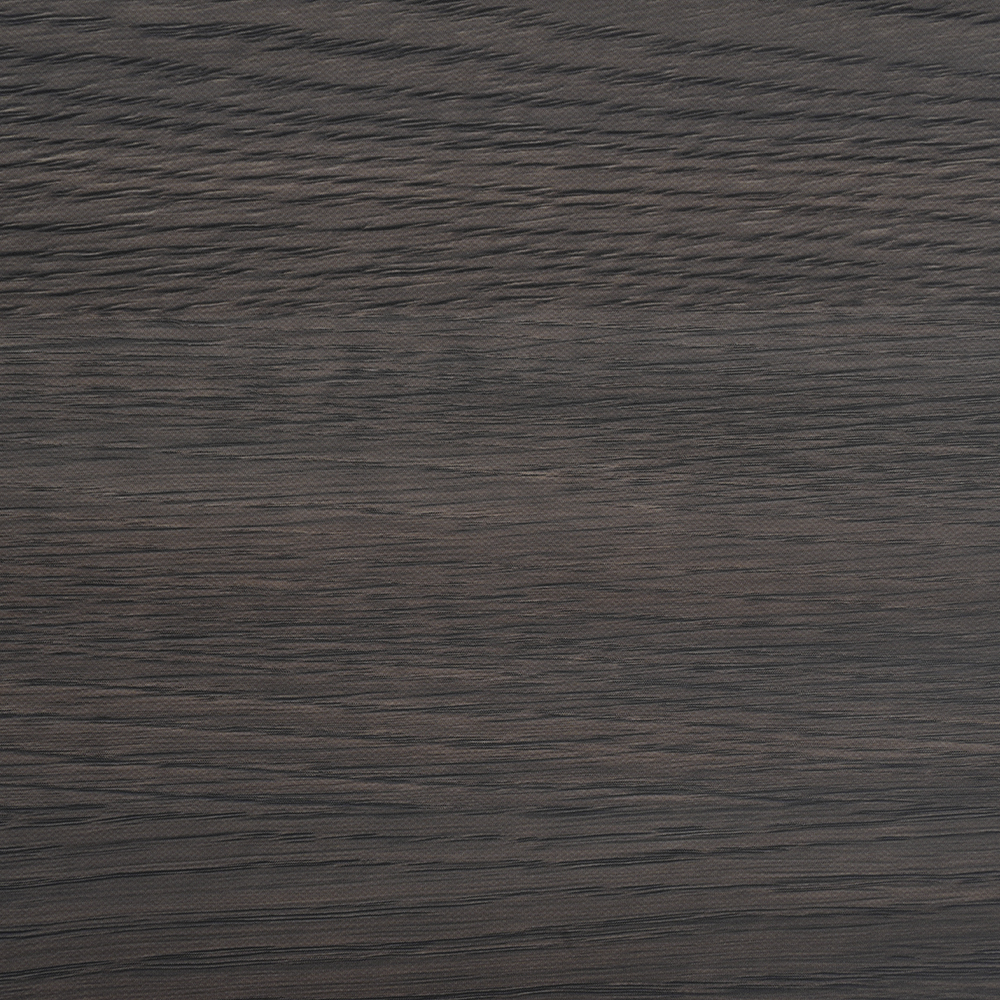
EB Excimer Decorative Film is a specific category of high-performance surface film built on two distinct manufacturing processes: electron beam (EB) curing and excimer UV surface treatment. Understanding what each process actually does — and why both together require more equipment, more controlled environments, and more precise materials — is the clearest way to evaluate whether the price difference is justified for your application.
What EB Curing Actually Does to a Film's Surface
Standard PVC decorative films are typically cured using heat or conventional UV lamps. The process works, but the resulting molecular structure has limitations: moderate surface hardness, susceptibility to scratching under daily contact, and relatively loose polymer chains that can absorb oils and stains over time.
Electron beam curing replaces that process with something fundamentally different. Inside a shielded vacuum chamber, a heated filament generates a stream of high-energy electrons. Those electrons are accelerated and directed at the coating layer on the film surface. When they penetrate the material, they trigger immediate, deep polymerization — forcing the polymer chains to cross-link into a dense, three-dimensional network throughout the entire coating depth, not just at the surface.
The practical result is a surface that is significantly harder and more chemically resistant than conventional UV-cured film. The cross-linked structure resists scratching, repels oils and water-based stains, and maintains dimensional stability under heat and mechanical stress. It also means no photoinitiators are needed in the formulation — which is part of why EB-cured films can be produced solvent-free and VOC-free without compromising cure quality.
This is the foundation layer of what makes EB Excimer film perform differently. But electron beam curing alone doesn't produce the surface aesthetic that defines this film category.
What Excimer Technology Adds on Top
The matte finish on most decorative films is achieved by adding silica or other matting agents to the coating formulation. This works visually, but creates a rough, particle-filled surface texture that traps dirt and oils in the microscopic gaps between particles. Over time — especially on frequently touched surfaces like cabinet doors or drawer fronts — cleaning and handling gradually polish those particles smooth, creating uneven sheen and what manufacturers call "burnishing."
Excimer technology solves this differently. An excimer lamp emits highly focused UV light at approximately 172 nanometres — a wavelength with extremely low penetration depth. When this light hits the top layer of a freshly applied coating in a nitrogen-inerted environment, it instantly triggers photopolymerization in only the outermost few microns of the surface. That near-surface layer cures and contracts faster than the material beneath it, creating a controlled micro-folded structure — thousands of tiny wrinkles at a scale invisible to the eye but measurable under a microscope.
This micro-folded topography is what scatters light and produces an ultra-matte finish — without any added matting particles. The surface remains chemically dense and non-porous. It repels fingerprints and oils instead of trapping them. And because there are no particles to polish away, the matte level stays consistent through years of use. The same wrinkled microstructure also reduces the contact area between the film and human skin, which is what creates the characteristic soft-touch feel.
After the excimer stage, the deeper coating layers are fully cured by the EB process or a secondary UV step, locking the folded surface structure permanently in place.
How EB Excimer Film Differs from Standard PVC in Practice
The technical differences translate directly into measurable performance gaps. The table below summarizes the key comparison points for furniture and interior applications:
| Property | Standard PVC Film | EB Excimer Film |
|---|---|---|
| Surface hardness | H–2H (pencil hardness) | 3H–4H (pencil hardness) |
| Matte finish method | Silica / matting agents added to coating | Micro-folded surface via excimer treatment |
| Long-term matte stability | Burnishing occurs over time with use | Stable; no particles to polish away |
| Stain / oil resistance | Moderate; rough texture traps oils | High; dense, non-porous surface |
| Fingerprint resistance | Standard | Enhanced; oils bead rather than spread |
| Soft-touch feel | Not typical | Yes — inherent to the surface structure |
| VOC / solvent content | Varies by formulation | Solvent-free, VOC-free |
| Thermoforming compatibility | Good | Good — maintains performance after forming |
In high-contact applications — kitchen cabinets, wardrobe interiors, commercial furniture — the gap between these two columns is felt daily. In lower-contact applications, the difference matters much less.
Why EB Excimer Film Costs More: Three Real Reasons
The price premium on EB Excimer film isn't arbitrary. It comes from three compounding cost factors in the production process.
1. Specialized Equipment with High Capital Requirements
Electron beam curing requires a shielded accelerator system capable of generating and directing high-energy electrons under vacuum conditions. These are not standard laminating or UV coating lines — they represent a significant capital investment that most film manufacturers don't have. Similarly, industrial excimer lamp systems that operate at 172nm in an inert nitrogen atmosphere are purpose-built units, not interchangeable with conventional UV equipment. The depreciation of this specialized equipment is embedded in the cost of every meter of film produced.
2. Process Complexity and Environmental Controls
The excimer treatment step requires a nitrogen-purged environment because oxygen at 172nm wavelengths interferes with the photopolymerization reaction and inhibits proper surface wrinkling. Maintaining continuous inert gas atmosphere in an inline production setting adds both operating cost and process management complexity. The EB curing step similarly requires a vacuum chamber and radiation safety protocols. These are not incremental process additions — they represent an entirely different manufacturing infrastructure compared to standard PVC film production.
3. Formulation and Raw Material Specifications
EB-curable coating formulations use specialized acrylate resins that are compatible with electron beam cross-linking. These formulations are more expensive per kilogram than conventional UV-cure or solvent-based coatings. They also require tighter quality control at the raw material level, since inconsistencies in the resin chemistry directly affect the depth and uniformity of cross-linking. When all three cost layers are combined — equipment, process environment, and materials — the per-meter production cost is meaningfully higher than standard PVC film.
Where the Price Premium Actually Makes Sense
Not every application justifies the upgrade. The decision depends primarily on how demanding the end-use environment is and how visible surface degradation will be to the end customer.
EB Excimer film is the right choice when:
- The surface will be touched frequently — kitchen cabinet doors, drawer fronts, wardrobe handles, commercial reception desks, retail display furniture
- Consistent matte appearance over years of use is a product quality expectation — premium residential or hospitality interiors where burnishing would read as deterioration
- Anti-fingerprint performance is a selling point — high-gloss dark colors or solid blacks where fingerprints are highly visible
- The furniture line targets a market segment where material certifications and eco-credentials (VOC-free, solvent-free) have commercial value
- The substrate will go through thermoforming or membrane pressing, and surface performance post-forming matters
Standard PVC decorative film is sufficient when:
- The application involves low-contact surfaces — back panels, interior drawer bases, display shelving not within arm's reach
- The product sits in a price-sensitive segment where the end customer's primary decision factor is cost per square meter
- The finish is a high-gloss pattern where matte stability and soft-touch are not relevant properties
For reference, anti-scratch wood grain PVC film for high-traffic furniture surfaces sits between standard and EB Excimer in both performance and price — a practical middle ground when scratch resistance matters but the full excimer surface specification isn't required. Similarly, PVDF decorative film engineered for outdoor and high-performance environments is another technology tier worth considering when UV and weather resistance are the primary concerns rather than matte aesthetics.
Application Guide: Surfaces and Substrates That Work Best
EB Excimer Decorative Film is compatible with the standard substrates used in furniture and cabinet manufacturing. MDF and particle board are the most common bases — both bond well with the film through hot membrane pressing or flat lamination, and neither substrate introduces surface irregularities that would compromise the excimer finish quality.
Door panels are a particularly strong application. The flat surface allows uniform excimer treatment across the full panel width, and the high-contact nature of door hardware zones (around handles and pull points) is exactly where the improved hardness and fingerprint resistance of EB Excimer film pays back. Wall cladding panels in commercial environments — hotels, offices, healthcare interiors — are another category where the anti-stain and easy-cleaning properties of the non-porous surface reduce long-term maintenance cost.
Processing temperature during membrane pressing should follow standard PVC film parameters; the EB-cured surface structure is thermally stable through the forming process and does not require modified equipment or adhesives. Indoor decorative film options for furniture panels and wall applications can provide useful context when selecting between film categories for a specific interior project.
One practical note on comparison sourcing: when evaluating EB Excimer film from different manufacturers, request samples of the same base color and test matte level consistency under both direct and raking light, stain resistance against cooking oil and marker, and surface feel after 50 cleaning wipe cycles. These three tests expose the real performance gap between genuine EB Excimer film and standard matte PVC film mislabeled as such.
For applications where three-dimensional surface texture and depth of relief are the priority alongside durability, embossed PVC decorative film with three-dimensional surface textures offers a complementary direction worth evaluating alongside EB Excimer options.
RÉAMHV:Scannán Maisiúil PVC le Dromchla Smooth: Snasta, Marthanacht & IarrataisAr Aghaidh:Scannán Maisiúil PVC Dath Aonair: Críochnaíonn Dromchla, Treoir Feidhmíochta & Roghnúcháin
Spéis agat i gcomhoibriú nó a bhfuil ceisteanna agat?
Meáin
-
-
1. Réamhrá le Scannán Maisiúil PVC 1.1 Cad é Scannán Maisiúil PVC? Is scannán tanaí, solúbtha é scannán maisiúil PVC, ar a dtugtar scannán vinil nó scragall PVC freisin...
LÉIGH TUILLEADH -
Réamhrá — Forbhreathnú ar Scannán Maisiúil PVC Grán Adhmaid agus Suíomh an Mhargaidh Tá Scannán Maisiúcháin PVC Wood Grain tagtha chun cinn mar scannán ildánach agus nuálaíoch...
LÉIGH TUILLEADH


 +86-13855983898 +86-0559-3588289
 Uimh. 41, Yongjia Avenue, Huizhou Dúiche, Huangshan Cathrach, Anhui Cúige, an tSín
Cóipcheart © Huangshan Hengying Co Tionscail, Teo. Gach ceart ar cosaint.